

Lawn Mowing Services: How to Compare Options and Book
You need your grass cut on a schedule you can count on, not whenever a crew happens to remember your address. Searching for lawn mowing services usually means you're comparing a handful of companies, checking prices, reading reviews, and trying to figure out who actually shows up week after week without cutting corners, literally.
The short answer: the best choice comes down to consistent scheduling , transparent pricing, and a company that stands behind its work if something gets missed. In Columbia, Blythewood, Elgin, and the surrounding Midlands, that means looking past the lowest bid and asking who sends the same crew to your property every time, who's licensed and insured, and who will fix a bad mow without charging you again.
This article walks through exactly how to compare mowing services in your area, what questions separate reliable providers from fly-by-night operators, and how to book once you've narrowed your list. We'll cover pricing expectations, service guarantees worth asking about, and the red flags that show up when a company can't keep a crew or a schedule. By the end, you'll know what to look for, whether that's a national franchise or a local, veteran-owned crew like ours.
1. Local lawn care companies like Sparta Lawn Care
Local, established companies are the backbone of the lawn mowing services industry in most mid-sized markets, and for good reason. These are businesses that have built a reputation over years, not weeks, and their survival depends on repeat customers rather than one-time jobs found through an app. A company like Sparta Lawn Care, veteran-owned and operating in the Midlands for more than 20 years, represents this category well: a real office, a real crew, and a name that shows up on your neighbor's invoice too.
How it works
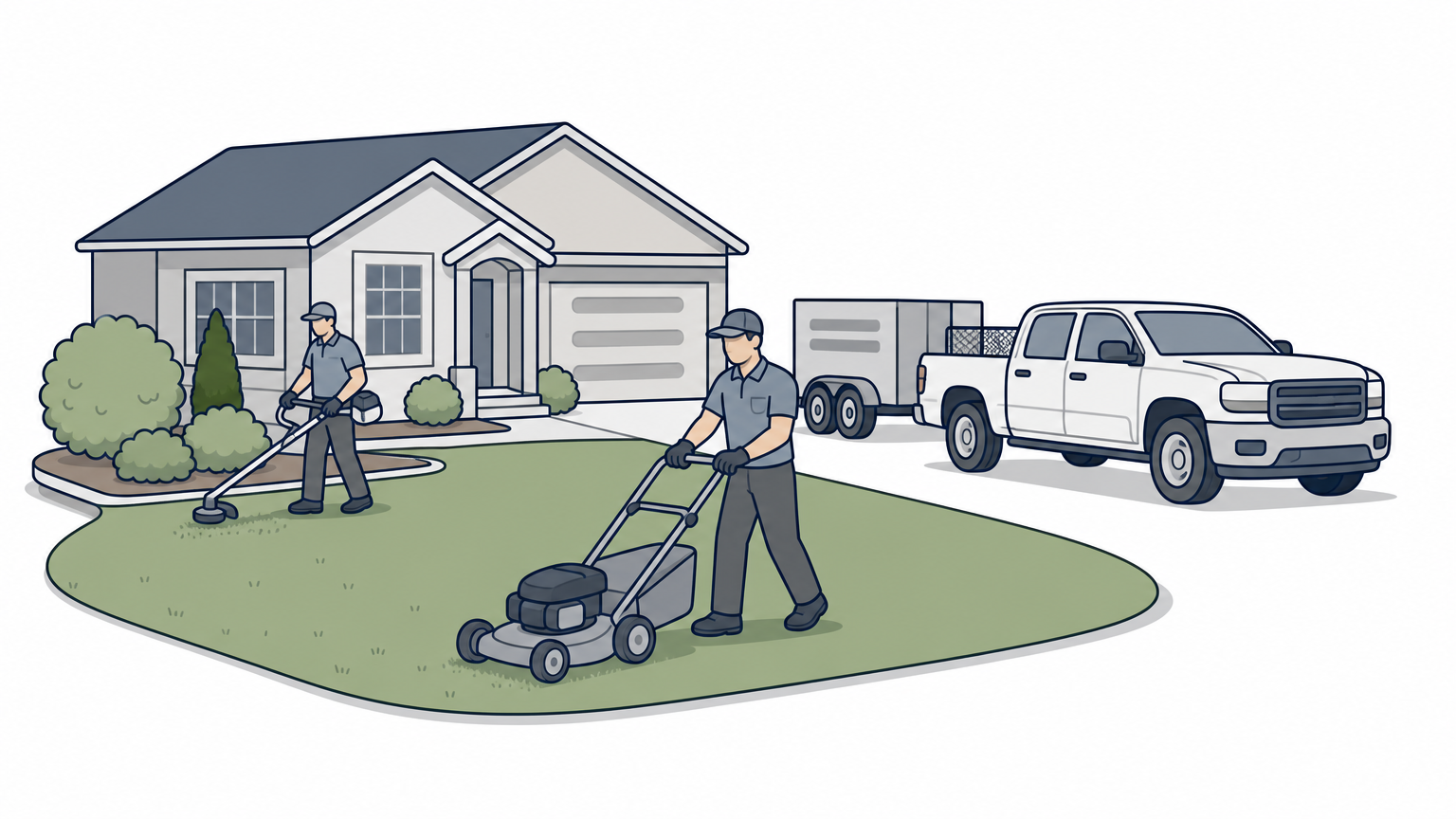
You typically start with a phone call, an online quote request, or a quick site visit where someone walks your property and gives you a written estimate. From there, most local companies assign a dedicated crew to your address, meaning the same one or two people show up every visit instead of a rotating cast of strangers. Scheduling is usually weekly or biweekly yard mowing in the Midlands depending on the season, and many companies, including ours, now run everything through a client hub where you can approve quotes, view upcoming visits, and pay online with a credit card rather than chasing down a paper invoice.
A crew that knows your property will catch problems a stranger never notices.
This consistency matters more than most homeowners expect going in. A crew that mows your lawn every week learns where your irrigation heads sit, how your grass responds to July heat, and whether last week's rain means they need to bag clippings instead of mulching. That kind of familiarity doesn't happen with a service that sends a different subcontractor every visit.
Who it's best for
This option suits homeowners and property managers who want a long-term relationship rather than a transactional service. It's also the right fit for anyone managing an HOA common area or a small commercial property who needs a single point of contact instead of coordinating multiple vendors. If you've been burned before by a company that missed visits or sent an unfamiliar crew that scalped your lawn, a local operator with a physical presence in your community is usually the safer bet.
Commercial property owners and HOA boards in particular benefit from working with a company that already understands residential landscaping work in Columbia, since mowing rarely stands alone. Most local providers bundle mowing with edging, trimming, and seasonal cleanup, which simplifies budgeting for boards that have to justify every line item.
Typical pricing
Pricing for local lawn care companies in the Midlands generally follows lot size and service frequency, and what you'll pay for mowing in 2026 breaks the numbers down further:
| Property size | Typical mow price | Frequency |
|---|---|---|
| Small residential (under 1/4 acre) | $35 to $55 | Weekly or biweekly |
| Mid-size residential (1/4 to 1/2 acre) | $50 to $80 | Weekly or biweekly |
| Large residential (1/2 to 1 acre) | $75 to $120 | Weekly |
| Commercial or HOA common areas | Custom quote | Weekly, contract-based |
Most companies offer a discount for signing up for a season-long or year-round contract instead of paying per visit, and many, like Sparta, let you add lawn fertilization and weed control treatments, aeration, or seasonal cleanups to the same invoice.
What to watch for
Not every local operator runs a tight ship, so it pays to vet them the same way you'd vet any contractor coming onto your property. Before signing anything, confirm:
- Licensing and insurance , since an uninsured crew leaves you liable if someone gets hurt on your lawn
- Whether they guarantee the same crew each visit, or rotate subcontractors without telling you
- A written satisfaction guarantee that spells out what happens if a mow gets missed or done poorly
- Clear, upfront pricing with no vague "we'll see when we get there" estimates
- Reviews that mention consistency over time, not just a single good experience
Sparta backs every job with the guarantee behind every mow we complete, which means we fix any issue at no extra charge until you're satisfied. That's the kind of accountability worth asking about before you sign with anyone, whether it's us or another local outfit.
2. On-demand lawn mowing apps and marketplaces
App-based mowing services work like a rideshare, except instead of a car showing up, a mower does. You open an app, punch in your address, and get matched with whichever provider in the network is available that week. Companies in this space market themselves as the fast, tech-forward alternative to calling around for quotes, and for a certain kind of customer, that pitch works well.
How it works
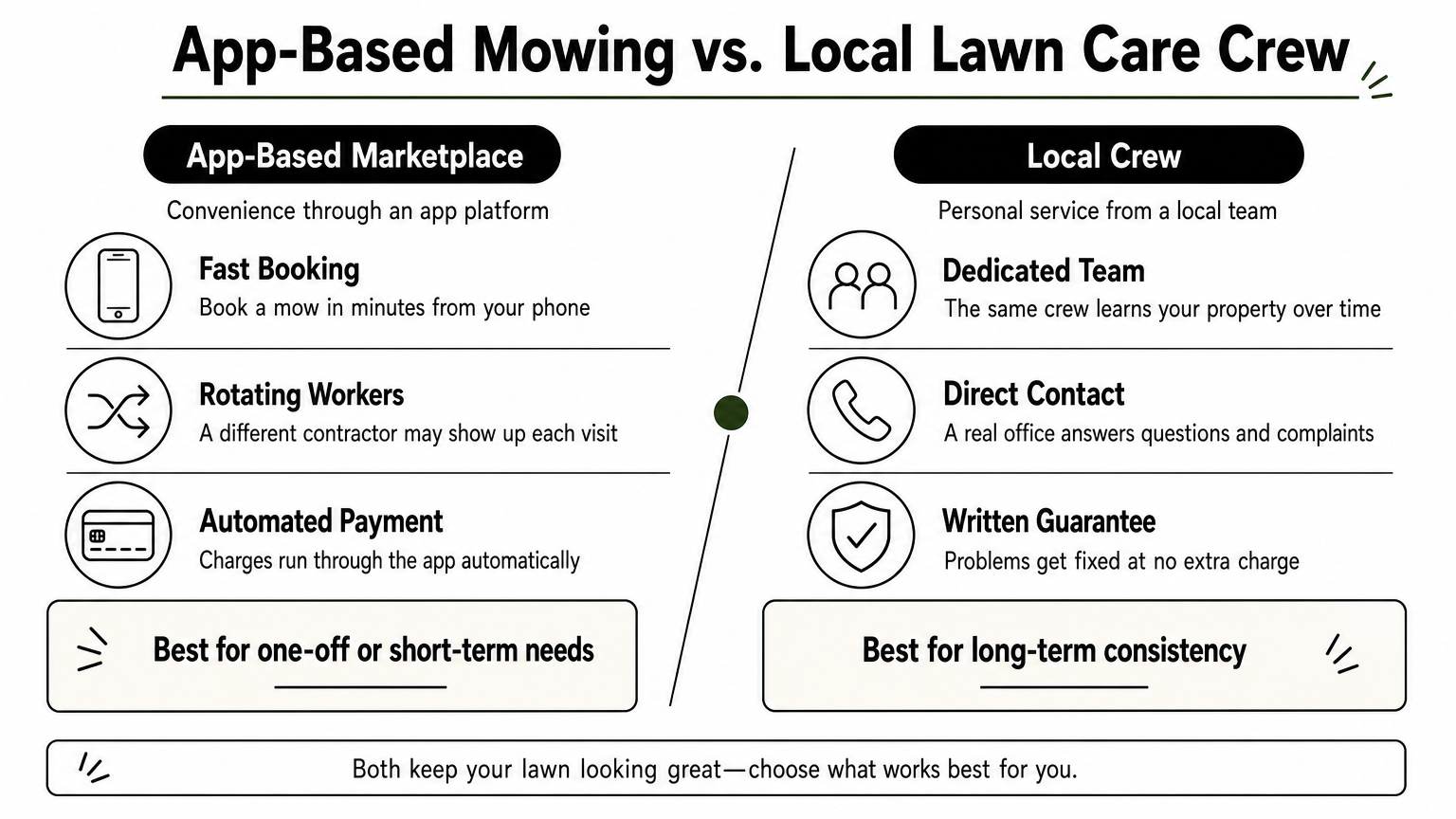
Booking starts with a few taps: enter your property size, snap a photo of your yard, and choose a mowing frequency. The app assigns your job to whatever independent contractor is available in your zip code, and payment runs automatically through the platform after each visit. Automated scheduling means you rarely talk to a human unless something goes wrong, and rescheduling around rain usually happens through the app's notification system rather than a phone call.
The catch is that the person mowing your lawn this week may not be the same person mowing it next week. These marketplaces route jobs to whoever's logged in and nearby, not to a dedicated crew assigned to your address specifically.
An app can find you a mower fast, but it can't promise you the same one twice.
Who it's best for
This option suits renters, people moving out of a property, or homeowners who need a single one-off mow rather than an ongoing lawn maintenance program. It also fits customers who value booking speed over relationship-building and don't mind a different provider each visit. If you travel often and need flexible, pause-anytime scheduling instead of a fixed weekly contract, an app-based marketplace can fill that gap reasonably well.
Typical pricing
Pricing on these platforms tends to run close to, or slightly above, local company rates, since the app takes a cut of every transaction:
| Property size | Typical per-visit price |
|---|---|
| Small residential | $30 to $50 |
| Mid-size residential | $45 to $75 |
| Large residential | $70 to $110 |
Some platforms advertise flat rates that look attractive upfront, then add fees for tall grass, first-time mows, or debris removal once the contractor actually sees the yard.
What to watch for
Before you commit to an app-based service, run through this checklist:
- Confirm whether the contractor is insured, since the app itself usually isn't liable for property damage
- Read recent reviews tied to your specific zip code, not just the app's overall rating
- Ask if you can request the same mower for repeat visits
- Check the cancellation window, since some apps charge a fee for same-day changes
- Watch for surge-style pricing during peak growing season in April through June
The biggest tradeoff with on-demand lawn mowing apps is consistency. You're trading the familiarity of a dedicated crew for convenience, which works fine for a single mow but tends to frustrate homeowners looking for a provider who learns their property over a full season.
3. National lawn care franchises
Big-name franchises like the ones you see advertised on national TV bring standardized service to markets across the country, including parts of the Midlands. These companies operate through local franchise owners who license the brand name, follow a corporate playbook, and pay into a national marketing budget. You get the recognizable logo on the truck, but the actual crew mowing your lawn works for a local franchisee, not the corporate office.
How it works
Booking usually starts on the national website, where you enter your zip code and get routed to whichever franchise owns that territory. From there, pricing, scheduling, and crew assignments depend entirely on that local operator, since corporate sets the branding but not the day-to-day service quality. Some franchises rotate technicians through routes based on efficiency software rather than assigning a fixed crew to your property, which means the person mowing your yard in June might not be the same person in August.
The logo on the truck tells you who owns the franchise, not who's actually mowing your lawn.
Most national brands bundle mowing with fertilization programs and require a season-long agreement rather than pay-as-you-go visits, which can lock you into services you didn't specifically ask for.
Who it's best for
This option fits homeowners who want a recognizable brand name and don't mind less flexibility in exchange for a standardized service menu. It also works for people who've moved from another city and already used the same franchise elsewhere, since the pricing structure and service tiers stay consistent across locations. If you value brand recognition over a personal relationship with your crew, a franchise can deliver predictable, if impersonal, service, though it helps to know what separates a good lawn care company from the rest first.
Typical pricing
Franchise pricing tends to run higher than local independents because of national marketing overhead and corporate fees passed down to the franchisee:
| Property size | Typical mow price | Contract requirement |
|---|---|---|
| Small residential | $45 to $65 | Often season-long |
| Mid-size residential | $65 to $95 | Often season-long |
| Large residential | $90 to $140 | Often season-long |
Expect upsells toward bundled packages that include weed control and aeration, since franchises typically earn more margin on add-on treatments than on mowing alone.
What to watch for
Before signing a franchise contract, check these details:
- Whether the agreement locks you in for a full season with cancellation penalties
- If crew assignments rotate or stay consistent visit to visit
- Local reviews for that specific franchise location, not the national brand's overall rating
- Whether quoted pricing includes edging and trimming or charges those separately
- How complaints get resolved, since corporate call centers sometimes slow down local fixes
Quality varies wildly from one franchise territory to the next, even under the same national name. A local, veteran-owned operator like Sparta Lawn Care answers directly to you, not to a corporate quota, which tends to show in how quickly problems get fixed.
4. Independent freelance mowers and gig workers
Somewhere between a full-time company and a teenager with a push mower, you'll find independent operators working solo or with one helper, often advertising through Facebook Marketplace, Craigslist, or a hand-painted sign at the gas station. These are real small businesses, just without a storefront, a fleet of trucks, or the overhead that comes with either. Plenty of homeowners in the Midlands use one of these mowers for years and never have a complaint, but the arrangement carries more risk than most people realize going in.
How it works
Contact usually happens through a text message or a phone call rather than a formal quote system, and pricing gets negotiated on the spot rather than published anywhere. Most freelancers work a fixed route of properties on a given day of the week, mowing your lawn maintenance job in between five or six others before moving to the next street. Payment typically happens in cash or through a payment app like Venmo or Cash App right after the mow, with no invoice, contract, or client portal involved.
Because there's no company backing the work, everything depends on one person showing up. If that person gets sick, moves, or simply stops answering texts, you're back to searching from scratch with zero notice, so it helps to know the seven signs of a mowing service worth keeping.
A one-person operation only works as well as that one person's truck starts every morning.
Who it's best for
This route suits homeowners on a tight budget who don't mind some unpredictability in exchange for a lower rate, especially for smaller yards that don't require commercial equipment. It also works for people who already know the mower personally, through a neighbor's recommendation or years of working with the same guy, since trust here comes from relationship rather than a business's reputation. If your property is straightforward, flat, and free of obstacles, an independent operator can often do the job just as well as a larger crew for less money.
Typical pricing
Freelance mowers generally undercut both local companies and franchises since they carry lower overhead:
| Property size | Typical mow price |
|---|---|
| Small residential | $20 to $35 |
| Mid-size residential | $30 to $50 |
| Large residential | $45 to $75 |
Expect pricing to shift based on the season, gas prices, and how busy that person's route already is, since there's no published rate sheet to hold them to.
What to watch for
Run through this list before handing over cash to an independent mower:
- Ask directly whether they carry liability insurance , since most don't, unlike a licensed and insured lawn care company, and you'd be on the hook for any damage
- Get a rough schedule commitment in writing, even a simple text confirming the day and time
- Have a backup plan for weeks they're unavailable, since there's no company to send a substitute
- Watch for price creep once they know you'll pay it
- Confirm they haul away clippings and debris, since some freelancers leave that to you
The savings are real, but so is the risk of a no-call, no-show week right before you're hosting a cookout.
5. Home-service marketplaces like Thumbtack and Angi
Thumbtack and Angi work differently than the mowing-specific apps in the previous section. Instead of routing your job to a single network of contractors, these platforms let multiple local businesses, including small lawn care companies, franchises, and solo operators, bid on your project. You're not hiring a company directly through the marketplace itself; you're using it as a lead-generation tool to compare several lawn mowing services at once before picking one.
How it works
Signing up starts with a project description: property size, how often you need mowing, and sometimes a few photos of your yard. The platform then pushes your request out to local pros who've paid for access to leads in your zip code, and you'll typically get several quotes within a day or two, sometimes faster during slow season. Bid-based pricing means you're comparing apples to oranges half the time, since one quote might include edging and cleanup while another covers mowing only.
Most of these platforms also show star ratings, review counts, and how long a business has operated in your area, which gives you a head start on vetting before you ever pick up the phone. Reaching out to three or four providers through the same request saves you the legwork of finding each one separately.
Who it's best for
Homeowners who want to compare mowing companies in your area without calling each one individually tend to like this option. It also suits people new to an area who don't have a neighbor's recommendation yet and want a quick way to see who's active and reviewed nearby. If you're the type who likes shopping three quotes before committing to anything, a marketplace speeds that process up considerably.
A marketplace gets you quotes fast, but the actual mowing still depends entirely on whoever you pick from the list.
Typical pricing
Pricing itself isn't set by Thumbtack or Angi; it reflects whatever the responding businesses charge, so expect a spread similar to hiring locally:
| Property size | Typical quoted range |
|---|---|
| Small residential | $30 to $55 |
| Mid-size residential | $45 to $85 |
| Large residential | $70 to $130 |
Some pros charge slightly more through these platforms to offset the lead fees they pay the marketplace, so a direct call to a local company can occasionally land a better rate for the same work.
What to watch for
Before booking through either platform, confirm a few things directly with the contractor:
- Ask whether the quote includes edging, trimming, and debris removal, or mowing alone
- Verify licensing and insurance yourself, since the platform doesn't guarantee either
- Read reviews for patterns around missed visits or inconsistent crews
- Get the actual company name and phone number so future bookings don't require going back through the app
- Ask about a satisfaction guarantee, since marketplace listings rarely spell one out clearly
Once you find a provider you like through one of these sites, it's usually worth building a direct relationship with them going forward rather than rebidding the job every season.
6. HOA and commercial grounds maintenance contractors
Property managers and HOA boards need something different from a homeowner searching for a weekly mow. These contracts cover common areas, entrance signage, retention ponds, and shared green space across dozens or hundreds of units, and the contractor handling that work usually operates as a specialized division separate from residential mowing crews. Finding this type of provider means looking past general lawn mowing services ads and toward companies that specifically advertise commercial and HOA grounds maintenance, since the equipment, insurance requirements, and scheduling logistics are a different animal entirely.
How it works
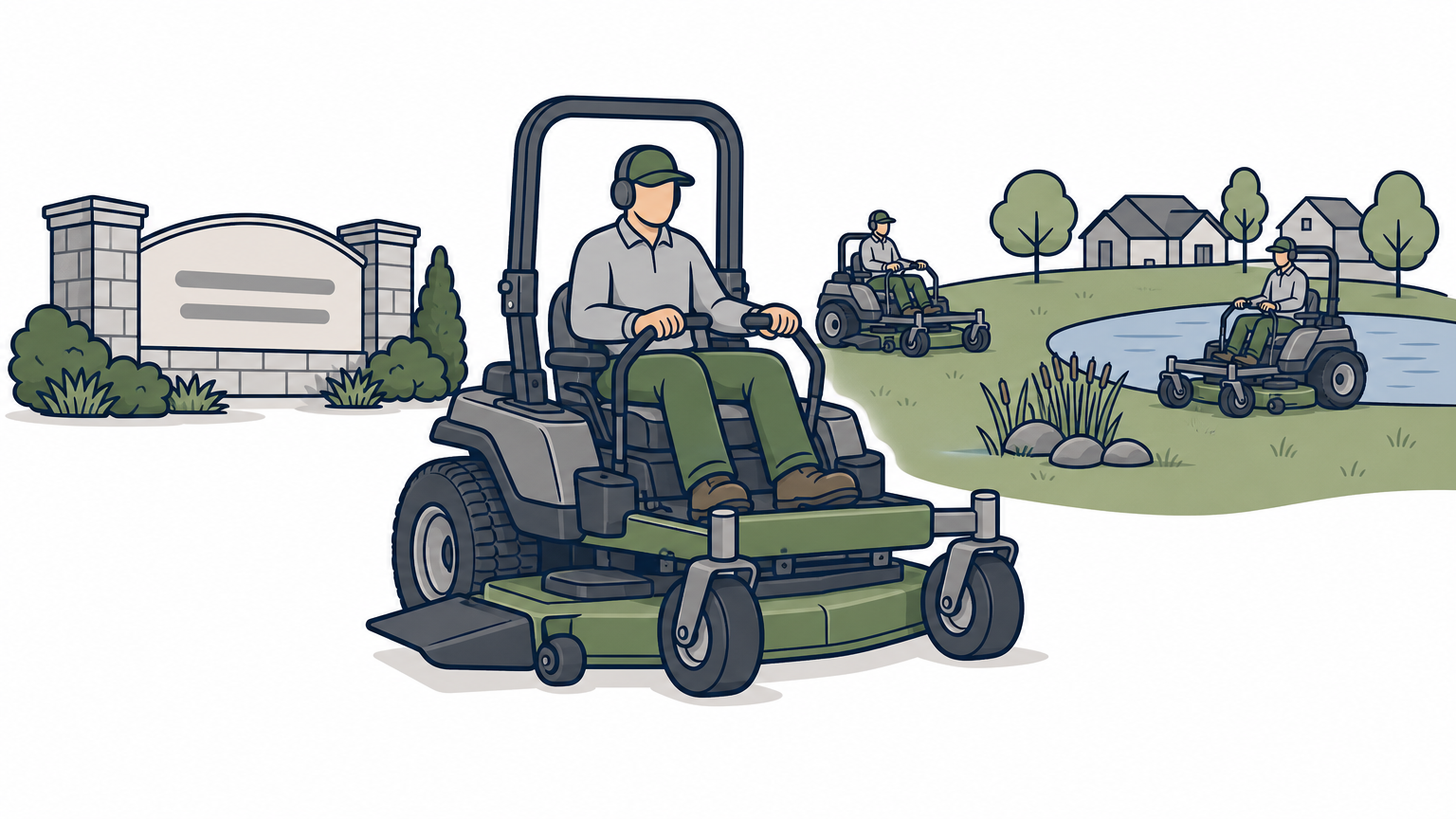
Getting quoted starts with a site walk , where the contractor and a board member or property manager tour the entire property together, noting mowing zones, planting beds, irrigation, and any tricky areas like slopes or drainage basins. From there, most contractors submit a formal proposal with a fixed monthly or seasonal rate rather than a per-mow price, since HOA budgets get approved annually and need a predictable number to plug into the line item. Crews typically run larger commercial mowing equipment built for acreage, not the residential push mowers or small riding units used on a quarter-acre lot, and visits often happen on a set day of the week that the whole community can plan around.
A board that signs a vague contract usually finds out what's excluded the hard way, mid-season.
Many of these contracts bundle mowing with edging, mulching, irrigation checks, and seasonal color rotations, since a single point of contact simplifies life for a board that doesn't want to coordinate five separate vendors for one property.
Who it's best for
This category fits HOA grounds and common-area maintenance, property management companies, and commercial property owners who need consistent grounds upkeep across a shared space rather than a single yard. It also suits business owners with a storefront or office park who want their curb appeal to reflect well on tenants and customers without managing the work themselves. If your property has common areas larger than what a residential crew handles efficiently, a contractor built for commercial scale is the right call.
Typical pricing
Commercial and HOA pricing scales by acreage and scope rather than a flat per-visit rate:
| Property type | Typical monthly range | Contract length |
|---|---|---|
| Small HOA common area (under 2 acres) | $400 to $900 | Seasonal or annual |
| Larger HOA or business park | $1,000 to $3,500+ | Annual |
| Standalone commercial property | $250 to $800 | Seasonal or annual |
Most contracts also list separate line items for aeration, fertilization, and mulch installation, since boards prefer itemized invoices they can present at annual meetings.
What to watch for
Before signing an annual agreement, confirm the contractor carries commercial general liability insurance well above residential minimums, since a mower accident on shared property opens up more exposure than a single-family yard. Check what happens during a rained-out week, whether the crew makes up missed visits or simply skips them, and get the exact scope of work in writing, down to whether storm cleanup falls inside or outside the base contract. Sparta Lawn Care handles this kind of work directly through its maintenance programs for office buildings, retail centers, and HOAs, built specifically for HOA common areas and business properties across the Midlands rather than adapted from a residential route.
7. DIY mowing with rented or owned equipment
Some homeowners never intend to hire anyone at all. Buying or renting your own mower and handling the job yourself is still the most common way lawns get cut in the Midlands, and for a straightforward yard, it's a perfectly reasonable choice. This isn't really one of the lawn mowing services on this list so much as the alternative to hiring one, but it belongs in the comparison because it's the baseline every other option gets measured against.
How it works
You either own a mower already or rent one from a hardware store or equipment rental yard by the day, then mow on whatever schedule fits your calendar rather than a contractor's route. Weekly mowing during peak growing season, typically April through July in South Carolina, keeps a lawn from getting away from you, while cooler months stretch that out to every two or three weeks. Beyond the mower itself, you're also responsible for edging, trimming around obstacles, and hauling or bagging clippings, none of which a rented machine handles on its own.
The mower is the easy part; showing up every single week is the part that gets skipped.
Who it's best for
DIY mowing suits homeowners with a small, flat lot, some free time on weekends, and a genuine interest in yard work rather than viewing it as a chore to outsource. It also fits anyone in a temporary living situation, like a short-term rental or a house about to go on the market, where paying for a season-long contract doesn't make sense. If your schedule is unpredictable, or your property has slopes, drainage issues, or size that demands commercial-grade equipment, this option starts costing you more time and money than it saves.
Typical pricing
Costs split between ownership and rental, and the math changes depending on how long you'll actually use the equipment:
| Approach | Typical cost | Notes |
|---|---|---|
| Push mower rental | $40 to $60 per day | Best for occasional use |
| Riding mower rental | $150 to $250 per day | Needed for larger lots |
| Entry-level push mower purchase | $250 to $500 | Pays off after roughly 10 to 15 mows |
| Mid-range riding mower purchase | $1,800 to $3,500 | Only worth it for larger properties long-term |
Factor in gas, blade sharpening, and annual tune-ups, since a neglected mower costs more in repairs than most homeowners expect.
What to watch for
Before committing to doing it yourself, weigh these factors honestly:
- Your actual free time on weekends, since a missed week in July means fighting overgrown grass the next one
- Storage space for a mower, trimmer, and gas cans, especially if you rent a townhome or condo
- Physical demands, since mowing a half-acre lot in Columbia's August heat isn't a light task
- Disposal of clippings and debris, which most rental agreements don't cover
- Whether your time is worth more spent elsewhere, since two hours of mowing every week adds up over a full season
DIY works fine until a busy month, a vacation, or a hot summer stretch turns weekly mowing into a chore you keep postponing. That's usually the point homeowners start looking at what local lawn care services cost and include again instead of fighting the mower every Saturday.
Picking the best option for your yard
Every option in this comparison trades something for something else. Apps and marketplaces win on speed but rarely send the same person twice. Freelancers win on price until they stop answering texts. Franchises offer a recognizable name but hand you off to whichever local owner bought that territory. DIY works until a summer heat wave turns Saturday mowing into a chore you keep skipping.
For most homeowners and HOA boards in the Midlands, the deciding factor comes down to consistent crews and a real guarantee behind the work, not just the lowest quote you can find. That's the gap local lawn care companies fill better than any app or franchise territory manager ever will, since accountability lives with actual people in your community, not a call center.
If you're ready to stop rotating through mowers and want a crew that knows your property season after season, request a free mowing and lawn care estimate and see what consistent lawn mowing services actually look like.